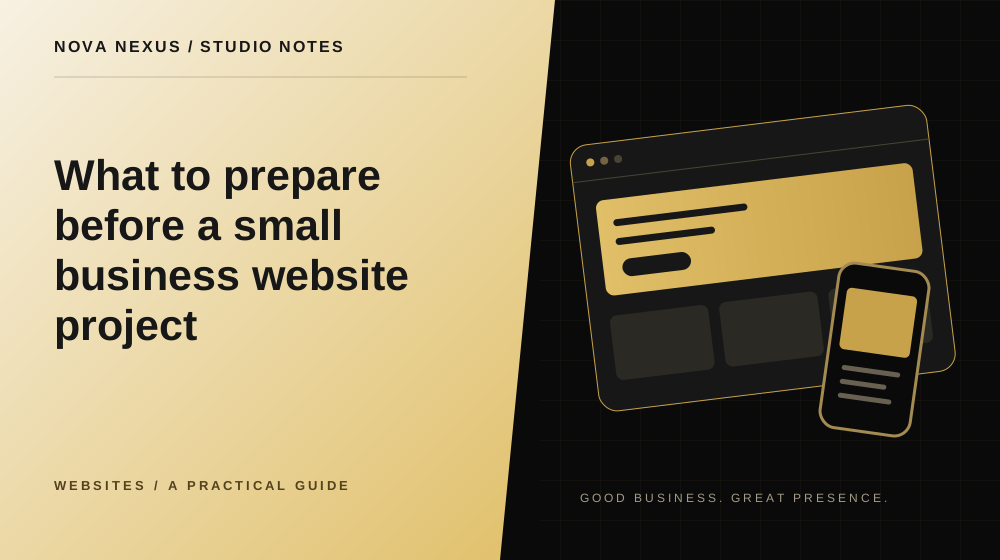
A clearer brief gives your website a better starting point than a folder of unrelated inspiration.
Decide what the website needs to do
Write one sentence describing the main job of the site. It might be to explain a service and invite enquiries, introduce a new business or help visitors compare a small set of offers. Supporting goals can follow, but a clear priority helps determine what belongs on the homepage and where the main call to action should lead.
Describe the visitor's starting point. Are they meeting the business for the first time or arriving after a referral? What do they already know, and what would stop them from taking the next step? Those questions give the design a practical direction before colors, layouts and animations enter the conversation.
Gather the facts before polishing the copy
Collect your service descriptions, contact details, frequently asked questions and any important terms. The information can be rough at first, as long as it is accurate. A questionnaire with clear answers gives a writer more useful material than polished sentences that avoid explaining the offer.
Separate approved facts from ideas that still need a decision. Label claims, statistics and customer quotes with their source and permission status. If you do not have a particular proof point, leave it out rather than filling the gap with a confident guess. The finished site should reflect the real business.
Bring the right visual assets
Provide the approved logo files, brand colors, fonts and any existing guide. Include original photographs at the best quality you have, with notes about how they may be used. Keep reference images in a separate folder so that inspiration cannot be mistaken for an asset the business owns.
Tell the designer what you want to preserve. A familiar logo, a useful newsletter popup or a successful page structure can remain while the surrounding site changes. It is equally helpful to explain what no longer works and why. Concrete examples reduce the chance of rebuilding something you were trying to move away from.
Map pages to real questions
Draft a simple list of pages and the question each one answers. The homepage introduces the business, a service page explains an offer and Contact makes the next step clear. Avoid creating pages only because another website has them. Each page needs enough useful material to justify its place.
Think about links between pages as well. A visitor reading about a service may need to see its scope, relevant examples and a way to enquire. This journey should feel natural. A sitemap is more than a navigation list; it is a plan for helping people move from interest to understanding.
Define decisions and dependencies
Agree who will approve the work and how feedback will be collected. If multiple people are involved, choose one person to return a combined response. Record any fixed date and explain what makes it fixed. A planned launch depends on content, review time and outside services as well as design work.
Identify integrations early, even if they will be connected later. Contact forms, booking tools and newsletter systems can affect the layout. Distinguish the visual design from the routing and account setup behind it. This keeps the scope clear and prevents a finished looking form from being mistaken for a fully tested workflow.
Create one organized starting folder
Use separate folders for brand files, images, copy, references and approved documents. Add a short readme with the main goal, page list, decision owner and open questions. The folder does not need to be perfect; it needs to be understandable to someone joining the project.
For Nova Nexus projects, website copy is developed from your questionnaire within the agreed scope. Clear information and timely combined feedback are useful contributions you can make before design begins. Preparing these ingredients helps the project focus on building the site instead of repeatedly searching for missing details.
Your next creative move
Ready to make this practical?
Explore our website design services, compare the available packages, or tell us what your business needs.
Tell us about your project
Nova Nexus
A creative studio for small businesses. Thoughtful brands, websites and marketing content, made to work beautifully together.
Meet the studio