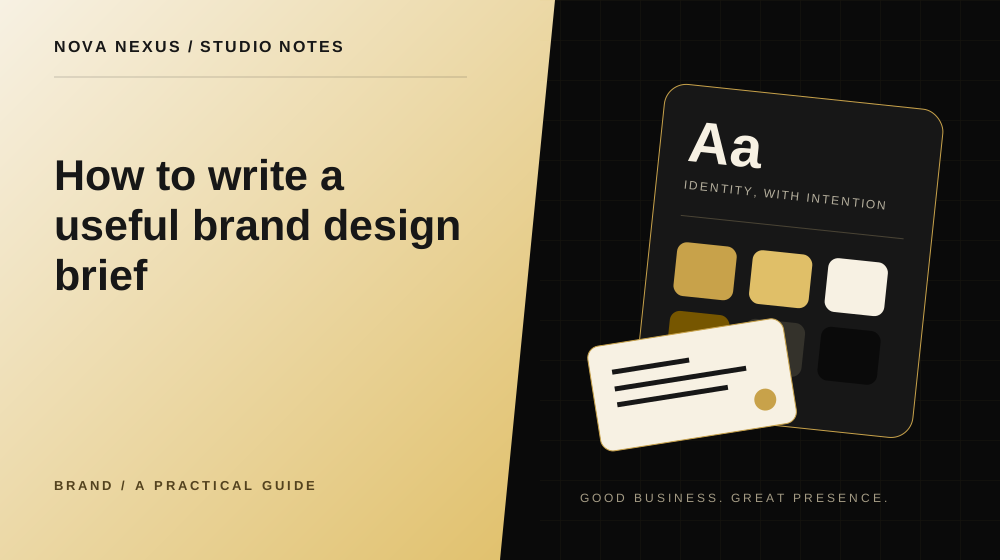
A useful brief gives the designer enough context to make decisions for the right reasons.
Describe the business in everyday language
Explain what you sell, who buys it and how customers usually find you. Use the words you would use in a real conversation. Include the service or product that matters most to the project. A broad statement about helping everyone rarely gives enough direction for a specific design decision.
Add a short description of what makes the current situation difficult. Perhaps your materials feel inconsistent, the business has changed or you have no identity at all. Explain the consequence, such as customers misunderstanding the offer or your team repeatedly rebuilding graphics. This connects the design request to a practical need.
Name the customer and the context
Describe the person most likely to use the materials and what they need to understand. Consider when they encounter your business: comparing providers, visiting a shop, reading a proposal or following a social post. The same identity must adapt to those situations, but the priorities may differ.
Avoid inventing an elaborate customer persona when you have little evidence. Start with questions real customers ask and patterns you have observed. If you are launching, label your assumptions and discuss them openly. Honest uncertainty is more useful than a confident description of an audience you have not met.
List the actual deliverables
Write down what you need to receive. This could include a logo, color palette, fonts, brand guide and business card design. Specify the most important formats and where they will be used. A clear deliverable list helps everyone understand what is included and what needs a separate discussion.
Distinguish final assets from examples used to demonstrate a direction. A mockup of a storefront does not necessarily mean signage production is included. Ask how files will be handed over and whether editable versions are part of the scope. These questions are easiest to resolve before design begins.
Use references with a reason
Share a small number of references and explain what you like about each. It might be the typography, restraint, warmth or way information is arranged. Also identify anything you do not want. This gives the designer a direction while leaving room to create an identity that belongs to your business.
Avoid asking for a direct copy of a competitor's logo or artwork. The useful part of a reference is the design principle, not someone else's identity. A designer can translate the qualities you admire into a different system. Your brief should make that distinction clear.
Set the review process
Choose one person to collect feedback and return a combined response. State who has final approval and when they will be available. If a project includes defined revision rounds, understand that a round is a consolidated set of feedback, not a series of disconnected messages over several days.
Give context with your comments. Explain what a design needs to communicate and where it falls short. “The small version is hard to read on our profile image” is actionable. “Make it pop” leaves the problem undefined. A useful review moves the project closer to a shared decision.
Prepare the starting folder
Gather the current logo, existing materials, approved business description and any images the designer may use. Separate reference images from assets you own. Clearly label older versions and confidential material so they do not accidentally become part of the public work.
Finish the brief with the desired timeline and any fixed event or launch date. Explain the reason for that date and identify dependencies such as photography or copy approval. A good starting folder and a clear brief reduce uncertainty, giving the creative work a firmer foundation from the first conversation.
Your next creative move
Ready to make this practical?
Explore our brand identity services, compare the available packages, or tell us what your business needs.
Tell us about your project
Nova Nexus
A creative studio for small businesses. Thoughtful brands, websites and marketing content, made to work beautifully together.
Meet the studio