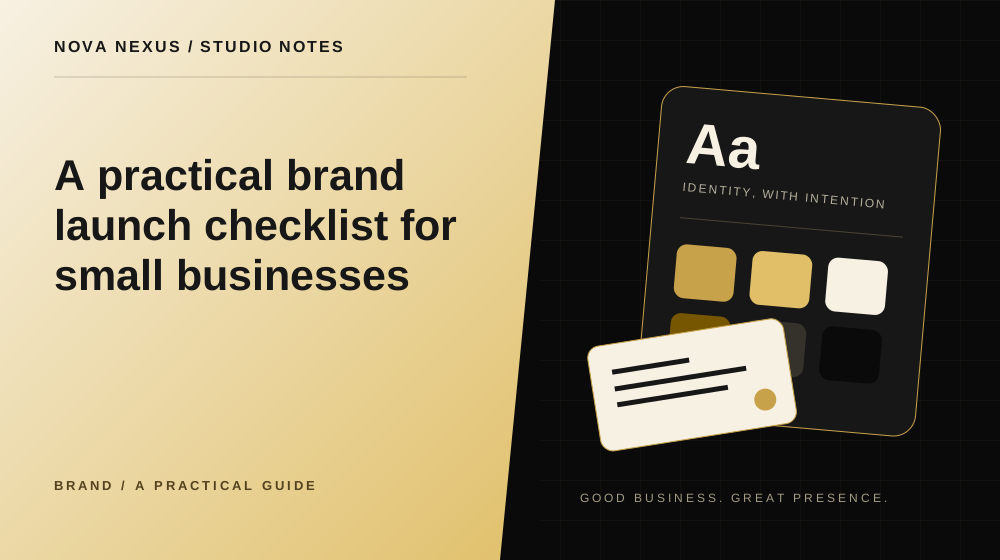
A brand launch works better when the visible change is supported by an organized handoff.
Confirm what is actually approved
Create one folder containing the final identity, current business description and agreed templates. Keep exploration files and rejected versions elsewhere. Before anything is uploaded, confirm that the name, spelling, logo arrangement and colors match the approved direction. This prevents a nearly finished file from becoming the public version.
Write down any items that are still waiting on a decision. A pending phone number, domain or service name can affect several materials at once. Resolve those dependencies first or mark the affected files clearly. A launch checklist is useful only when it distinguishes completed work from work that merely looks finished.
Map every customer touchpoint
List your website, social profiles, email signature, proposals, business cards, printed materials and directory listings. Include less obvious places such as invoice templates, download files and presentation covers. Assign an owner to each update and note whether it can be completed immediately or needs a supplier.
Group the list by priority. The places most customers see should usually be reviewed before rarely used materials. You may need a gradual rollout if printed stock or signage cannot change at once. Plan that transition deliberately so the mixture of old and new does not look like an oversight.
Prepare the website and profiles together
Check that the same business description, logo and contact details appear across your main online touchpoints. Review both desktop and phone layouts. A new logo may need different spacing in a header or profile image, even when the surrounding page is unchanged.
Update page titles, social sharing images and downloadable documents where relevant. These details are easy to miss because they sit outside the main page design. Make a short list of the exact URLs and profiles to check after the change. That gives the person reviewing the launch a clear path through the work.
Write a simple introduction
If you are refreshing an existing brand, explain what changed and what remains familiar. Customers may only need a short announcement that connects the new look to the business they already know. Focus on useful context rather than exaggerated claims about a logo changing everything.
Prepare the message in the formats you will use: a website note, social caption or email draft. Keep the wording consistent, but adapt the length to each destination. Make sure the person responsible for publishing has the approved copy and correct image files together.
Give collaborators the right materials
Send suppliers and collaborators the files they need for their specific task. A printer may need a different package from someone updating a social profile. Include a brief explanation of the approved versions and where the master folder lives. Do not assume they can identify the correct file from a large unsorted archive.
Keep a record of which materials have been updated and which are still pending. If a supplier sends a proof, check it against the final identity before approval. A coordinated handoff reduces the chance that an older file remains in use simply because it was easier to find.
Review the result as a customer
After the updates are ready, walk through the journey from a social profile to the website and then to the contact page. Check links, images, forms and downloadable files. Look for mismatched names, old logos and messages that no longer fit the offer. Record problems in one list and fix them in a sensible order.
Keep a backup of the previous materials and a dated copy of the approved launch package. This makes future updates easier and preserves the history of the work. The goal is a brand that can be used confidently after launch day, with clear files and simple rules to keep it consistent.
Your next creative move
Ready to make this practical?
Explore our brand identity services, compare the available packages, or tell us what your business needs.
Tell us about your project
Nova Nexus
A creative studio for small businesses. Thoughtful brands, websites and marketing content, made to work beautifully together.
Meet the studio